

I’ve had the pleasure of interviewing Enrique Hermoza, corporate head bartender at Museo del Pisco in Lima, for my Punch pisco cocktail stories. But for the first time, we chat about something more personal, a pisco cocktail he developed that celebrates Lima’s Chinese-Peruvian chifa culture like no other.
There are more than 6,000 chifas (Chinese-Peruvian restaurants) in Lima. For many limeños (residents of Peru’s capital), chifa is comfort food—a combination of Chinese and Peruvian food cultures that naturally evolved over the span of more than a century. Chifa is the food I grew up with; Mom cooked chifa dishes at home; and for family reunions and celebrations we always dined at a chifa.
Chifa culture is so strong that Peruvians call ingredients by their Cantonese names. Instead of the Spanish “gengibre” for ginger we say “kion,” and instead of “salsa de soya” for soy sauce, we say “sillao.” Many chifa menus list dishes in Cantonese too.
Recently, I came across a chifa-inspired cocktail at Museo del Pisco, a pisco-centric bar in Lima, Cusco, and Arequipa. So I reached out to Enrique Hermoza, and we had a chat about the inspiration behind this drink.
Nico: Hi Enrique, thank you for chatting with me about the chifa cocktail you created. But to begin, I’d like to hear about what chifa food and culture mean to you. Did you grow up eating chifa? Do you have a favorite chifa restaurant or dish? And do you cook any chifa dishes at home?
Enrique: My pleasure, Nico. To me, chifa is very meaningful as it was always one of my preferred cuisines. I grew up eating chifa food, and there was a chifa restaurant a block from my house. We’d go there two or three times a week.
I don’t have a favorite chifa restaurant; I feel that there are so many good chifas in Lima, so I can choose between eight or ten chifas near my home or work.
There’s this traditional chifa dish, Tipakay—the combination of sweet and sour sauce, crunchy chicken, and pineapple make it my favorite dish, without doubt. And at home I enjoy making arroz chaufa (Chinese-Peruvian fried rice).
Nico: So is the cocktail you created Pa’ti kay connected to Tipakay? What is the origin story of the cocktail?
Enrique: Indeed, this cocktail was born at a cafe when I was given the charge to create an offering that represents the taste of Lima. I thought of my favorite chifa dish, Tipakay, and from that point I created a liquid version with torontel (aromatic grape) pisco, tamarind, pineapple juice, and pear shrub.
The result is a sweet, acidic, and nostalgic combination that pays homage to Lima’s mestizaje—the multiethnic mix of people and cultures across centuries. The name of the drink, Pa’ti kay is a play on Tipakay, where pa’ti or “para ti” means “for you.”
Nico: I love that you mention nostalgia, chifa has always felt nostalgic because it’s the food we grew up with, that our parents grew up with, and that our grandparents ate. So it connects generations to a shared past. And it reminds us of home.
Now, all the ingredients you included in the cocktail are very chifa forward. But what about the pisco, why did you choose the torontel pisco for this drink?
Enrique: We chose the torontel pisco from Cholo Matías because of the bodega’s history and tradition, and because the torontel grape has pronounced notes of pineapple, jasmine, and pears. That way all the ingredients have a natural dialogue and integrate harmoniously.
Nico: There are so many pisco cocktails with quebranta (non-aromatic grape), so it’s always wonderful to see a pisco cocktail with an aromatic grape like torontel.
Yet, I am wondering what the drink tastes like. Can you describe the experience of drinking this cocktail?
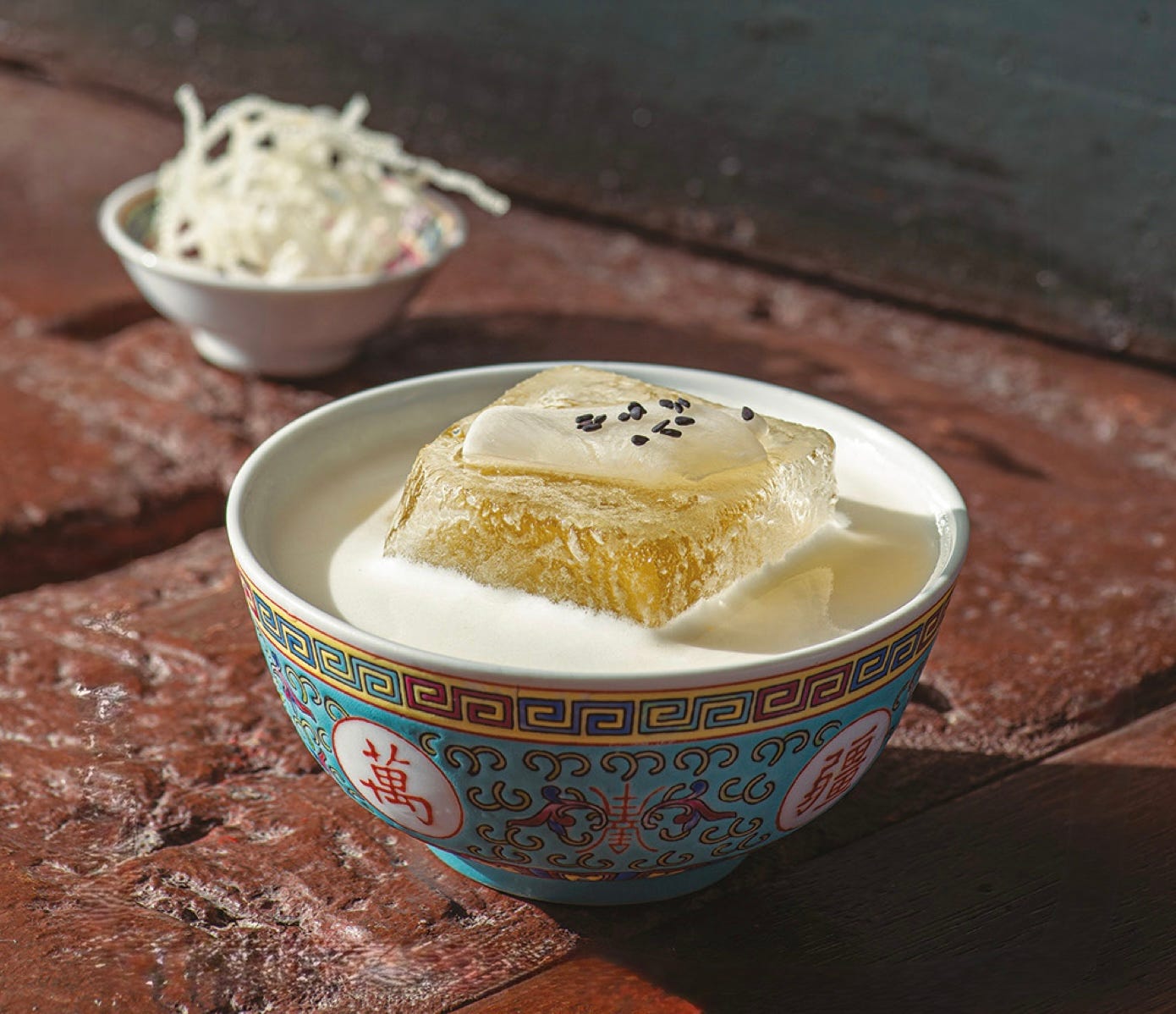
Enrique: This is a cocktail with a marked intensity and complex pairing of ingredients. In the nose, one perceives aromatic notes of pineapple, flowers, pear, and tamarind. In the palate, the first sip is robust and dense. The pickled turnip activates the taste buds even more, creating an interesting umami sensation. While the fansi (fried glass noodle) accompaniment cleans the palate, allowing you to continue enjoying the drink.
Nico: In Lima’s creole culture, food and music always go together, right? So what Peruvian creole song would you select as the soundtrack for this drink?
Enrique: Definitely the vals criollo (creole waltz) “Alma, corazón y vida.” Alma (soul) represents the mestizaje between Peru and China; corazón (heart) symbolizes our pisco; and vida (life) because this cocktail invites us to cheer to the cultural richness of our country.
The song was composed in 1948 by the Peruvian musician Adrián Flores Albán, and made popular in the 1950s by the Peruvian trio Los Embajadores Criollos. The chorus says: “alma para conquistarte, corazón para quererte y vida para vivirla junto a ti"—”soul to conquer you, heart to love you, and life to live with you.”
Nico: Is there anything else you’d like to add about the cocktail or its place in Lima’s culture?
Enrique: Pa’ti kay is not just a cocktail, it’s a liquid interpretation of Lima’s mestizaje, where pisco has a dialogue which chifa cuisine. This is one of the cultural expressions that most represents the city. And at Museo del Pisco we believe that through cocktails we can tell stories.
Our mission is to reevaluate pisco through well conceptualized offerings that respect the product, the technique, and the complete experience, including the drinking vessel. That’s why we serve this cocktail in a Chinese bowl, as a nod to its origin and Lima’s collective memory.
We would like for Pa’ti kay to become a symbol of Lima in a cup. So when they ask us, “what does Lima taste like?”—the answer is clear: pisco, chifa, and mestizaje.
Nico: Enrique, it was a pleasure chatting with you. And thank you for sharing the recipe for the cocktail. Museo del Pisco is at the top of my list on my next trip to Lima.
Enrique: You are welcome Nico, we will be waiting for you with a drink or two.
I’ve interviewed Enrique for these Punch pisco cocktail stories:
The Capitán Is Lima’s Old-Guard Aperitivo—For more than 150 years, the Manhattan-like pisco drink has been a Peruvian staple.
The Pisco Punch Comes Home—Lima bartenders are making a late 19th-century cocktail from San Francisco their own.
Pa’ti kay — A chifa-inspired cocktail by Enrique Hermoza | Museo del Pisco
Serves: 1
INGREDIENTS
2 ounces torontel pisco
1 ounce pineapple juice
1 ounce pear shrub
20 grams tamarind pulp
Garnish: a slice of pickled turnip and black sesame seeds
Pairing: fried glass noodles.
DIRECTIONS
Add the pisco, pineapple juice, pear shrub, and tamarind pulp to a cocktail shaker with ice; then shake vigorously for 20 seconds.
Double strain over a large ice cube in a Chinese bowl or Old Fashioned glass.
Garnish with a slice of pickled turnip and black sesame seeds.
Accompany with fried glass noodles.
Excellent article!
Your posts are always so fascinating! I had no idea about a Chinese-Peruvian culture/cuisine. Wish I could visit Lima.