

Mario Vargas Llosa made me cry twice: when he won the Nobel Prize in Literature in 2010, and when he died in 2025. The rest of the time, he immersed me in the tragic, comic, and nostalgic worlds he created in his novels and from which I emerged changed and with a longing to tell Peruvian stories.
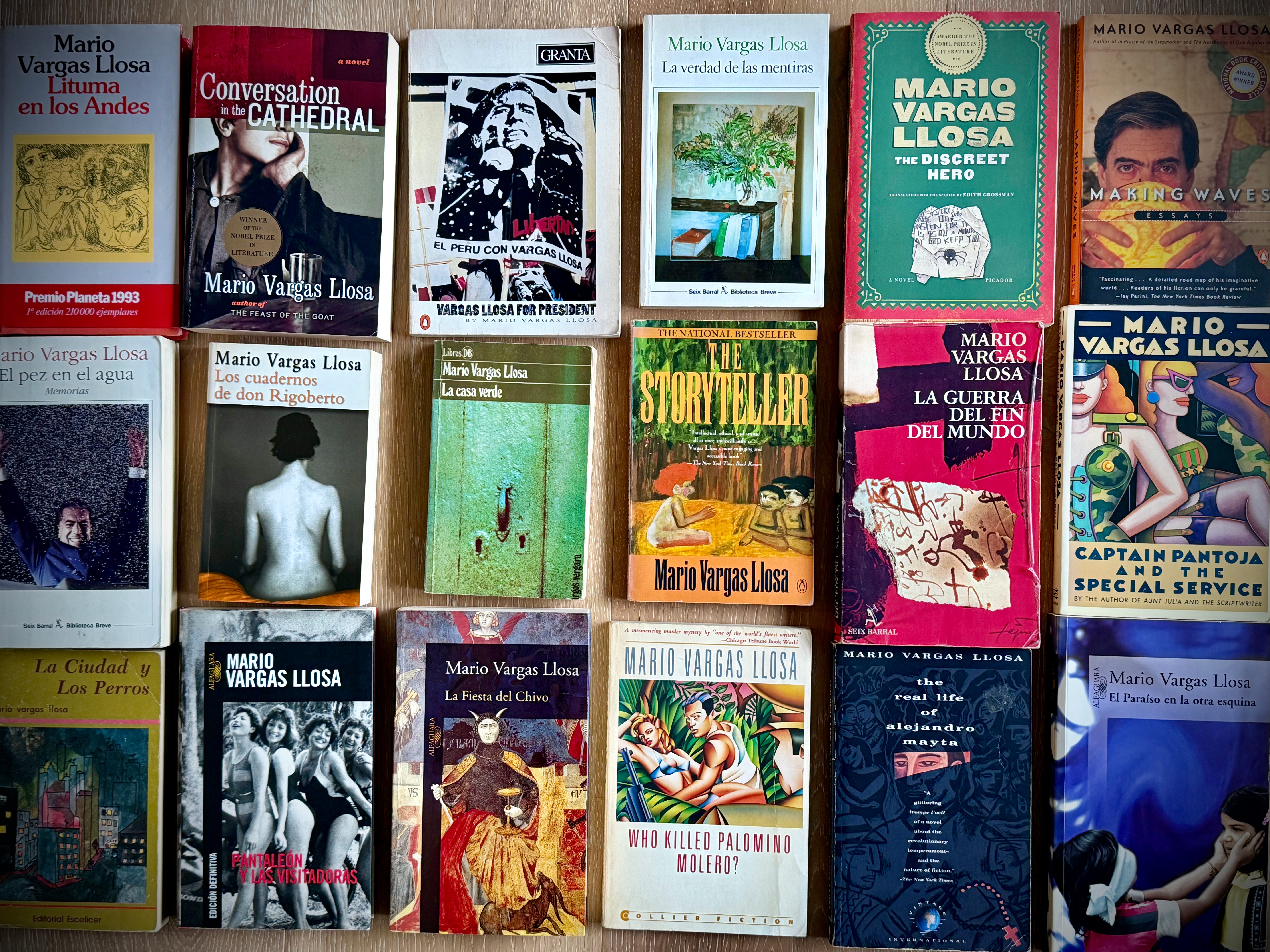
When people burned Vargas Llosa’s first novel La Ciudad y Los Perros (The Time of the Hero), a semi-biographical account of Lima’s infamous military academy, he said, “Well, that’s an extraordinary compliment.” His courage to speak out about politics and social inequality made him a powerful, controversial, and fearless writer. Because of that, for more than 30 years I’ve been collecting his stories that have taken me across eras from Lima to the Andes to the Amazon and beyond.
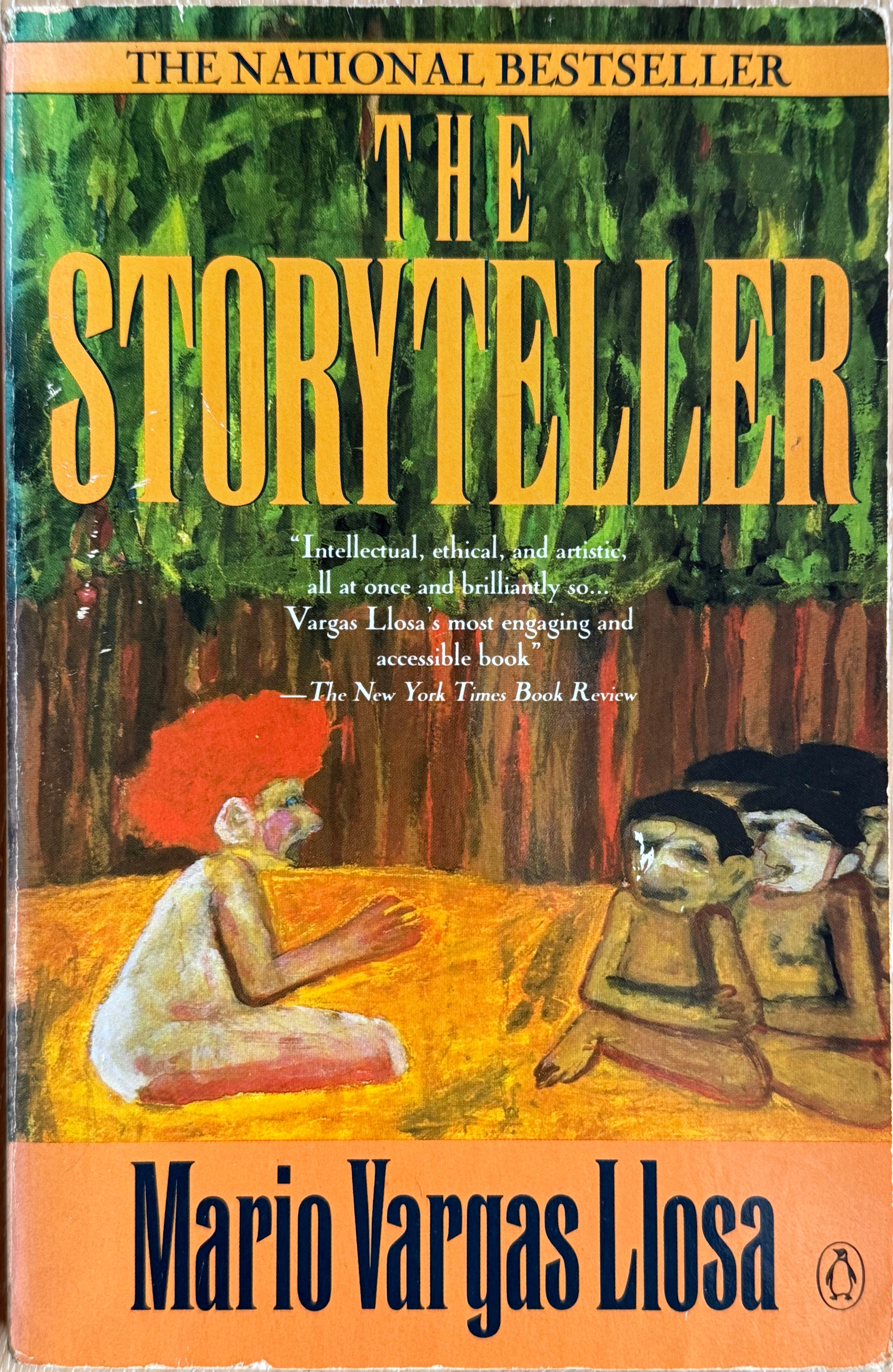
My mom told me that when she was a law student at the National University of San Marcos in Lima circa 1960, Vargas Llosa was a year ahead and she would see him walking around campus. In particular, Mom recalled his red-haired friend who inspired a character in El Hablador (The Storyteller), a novel about a university student who leaves Lima’s modern civilization to become a storyteller for a tribe in Peru’s Amazon.
“Storytellers are a tangible proof that storytelling can be something more than mere entertainment... Something primordial, something that the very existence of a people may depend on.” — Mario Vargas Llosa
I think that is why The Storyteller is my favorite of Vargas Llosa’s novels, for it made me realize that I have a sacred duty to be a culinary storyteller, like my mom.
Much like her cooking, storytelling came naturally to my mom. Perhaps because it’s an important element in the Indigenous culture of our ancestors, where recipes are passed down orally across generations. Now, through my cooking and writing, I strive to preserve Peru’s food and drink culture and create a bridge that connects the traditions of the past to the present.
In 1988, my mom and I attended the Harbourfront Reading Series in Toronto to see Adrienne Clarkson interview Mario Vargas Llosa. They chatted about literature and politics, two inseparable themes throughout Latin America. Their conversation was humorous, candid, and refreshingly intellectual. To end their encounter, Clarkson asked whether Vargas Llosa entering politics would interfere with his writing, to which Vargas Llosa quipped, “Oh yes. That will be a catastrophe for my writing.”
At the end of the night, my mom and I approached Vargas Llosa. She introduced herself, and told him how they shared an alma mater. Vargas Llosa was intrigued and pensive, perhaps recalling his university days decades ago. Toronto is some 3,000 miles from Lima, yet at that moment my mom and Vargas Llosa had a brief connection that took them home. I can only imagine the longer conversation my mom would’ve had with Vargas Llosa if they had met at a cafe in Lima instead.
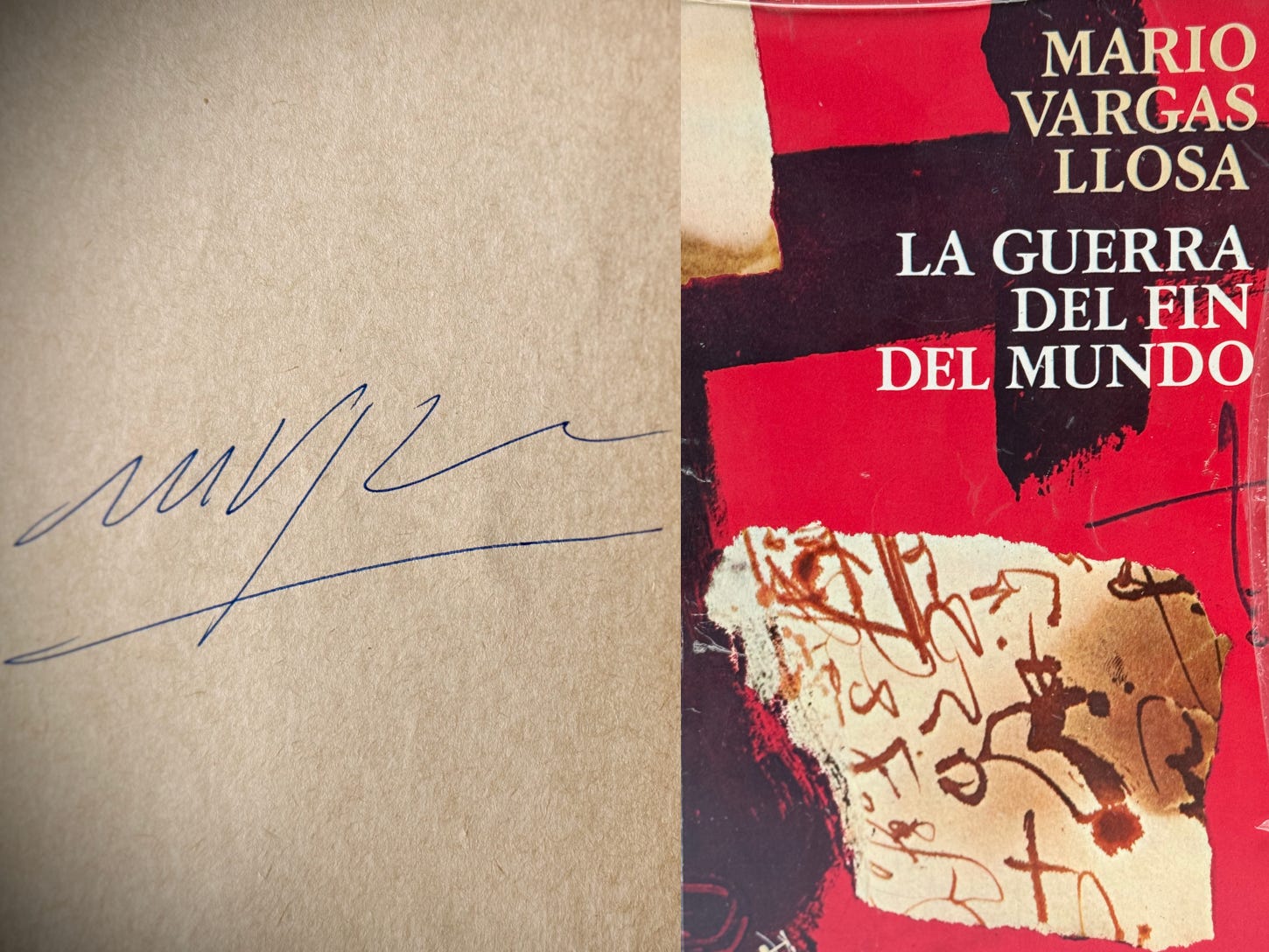
When I told him I was an engineering student he said I chose a noble profession. I think Vargas Llosa would smile if he knew that today I am a writer and a cook, and that I still hold dear my copy of La Guerra del Fin del Mundo (The War at the End of the World) that he autographed that night.
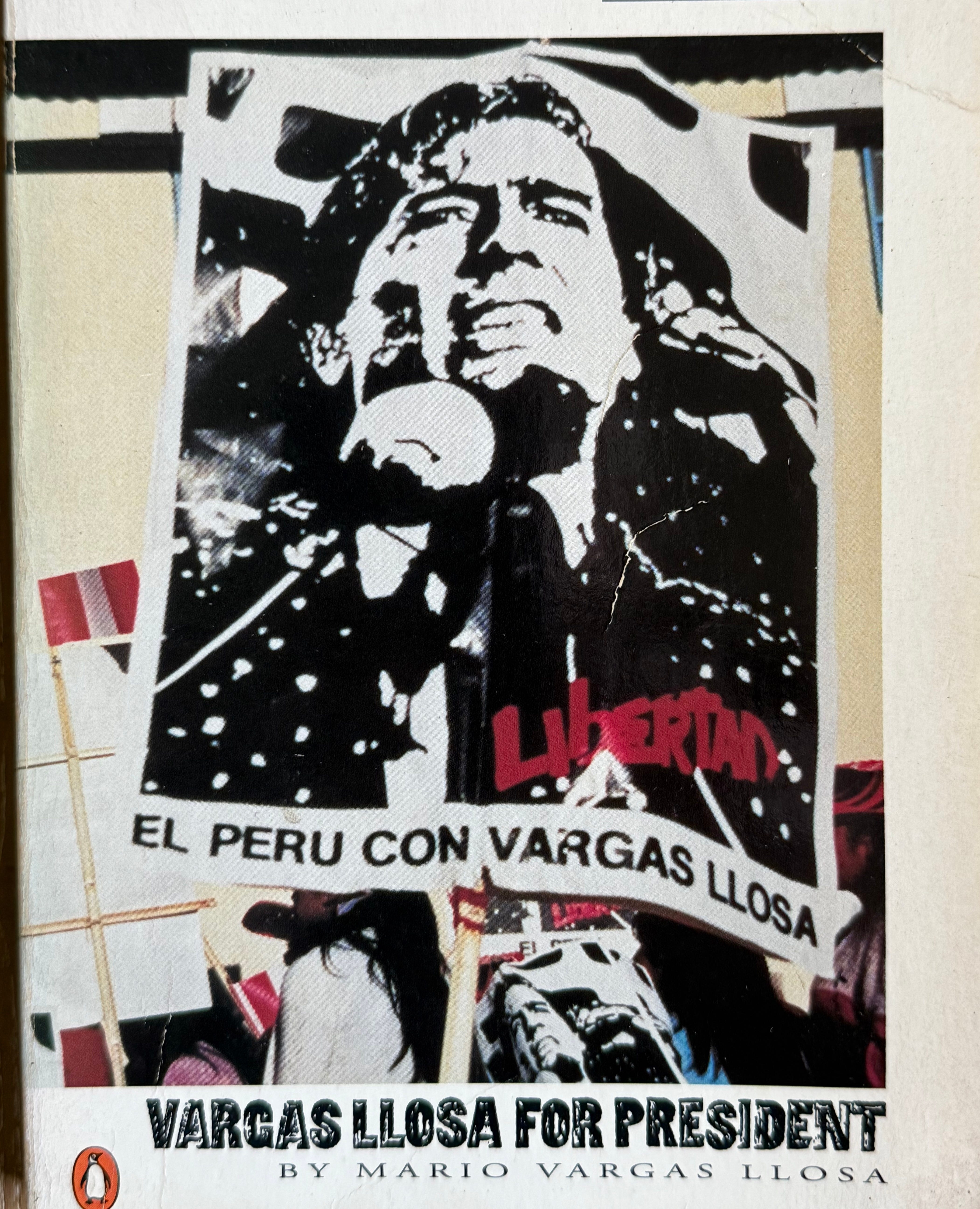
Two years later, amidst death threats during his campaign, Vargas Llosa ran for president of Peru, losing to Alberto Fujimori. In one essay, he recalls leaving a podium after a speech at a plaza in Lima. But before he could make it to his entourage, a car cut him off, a group of men forced him in, and took off. At that moment, Vargas Llosa thought he was dead. But instead, the men said, “We are your new bodyguards.” Their brazen act was proof positive Vargas Llosa’s current protection was inadequate. They thought Vargas Llosa was too important, so they stepped in.
In 2010, Vargas Llosa won the Nobel Prize in Literature. The first for a Peruvian. Though it was a singular achievement it truly felt like a prize for all Peruvians, and the recognition of our stories made us all proud. Years before, in a television program, the host asked Vargas Llosa:
Host: Is there a Latin American who deserves the Nobel Prize in Literature?
Vargas Llosa: Of course, I think Borges deserves it, I think Octavio Paz from Mexico is an author who deserves it. I think our literature has authors who are capable of receiving that recognition.
Host: Any Peruvians?
Vargas Llosa: Well, I don’t know if a contemporary Peruvian author is at the level of the aforementioned authors, but I hope there will be one, soon.
Vargas Llosa’s modesty, at not including himself as worthy of the Nobel Prize, is striking and in sharp contrast to all the accolades he’s earned throughout his long career shaped by the hard work, discipline, and artistry demanded of a novelist.
“The Nobel Prize in Literature 2010 was awarded to Mario Vargas Llosa for his cartography of structures of power and his trenchant images of the individual's resistance, revolt, and defeat" — The Nobel Foundation.
A decade ago, when I used to teach at a community cooking school in San Francisco, my brother sent me a verse from Vargas Llosa’s novel Lituma en los Andes (Death in the Andes). One character is consoling the broken-hearted protagonist who is investigating mysterious disappearances in a mining camp and tells him that eating traditional creole dishes is the antidote for his romantic woes:
Tamales, anticuchos, chicharrones con camote, ceviche de corvina, rocotos rellenos, conchitas a la parmesana, causa a la limeña and ice cold beers. That is the beginning. Then, ají de gallina with white rice and seco de cabrito. And to end the afternoon, mazamorra morada with turrón de doña Pepa. Before getting to the seco de cabrito you will have forgotten about her forever.
That inspired me to create a Valentine’s Day dinner: A Peruvian Pop-up to Cure a Broken Heart, which included dishes from the list. And so, Vargas Llosa’s stories have not only fueled my passion for writing, they have also influenced my cooking.
When Vargas Llosa died in 2025, I was sad that one of my favorite storytellers was gone. Every few years, he’d publish a new novel, which I would read and add to my library. That routine was a constant in my life. But even without that, I still have work to do. I need to track down a few novels I missed, reread old favorites, and most importantly keep alive the longing to tell Peruvian stories.
Death in the Andes was my first Mario Vargas Llosa book and I enjoyed it thoroughly. Intrigued by your description of The Storyteller!