

Nikkei cuisine—the centuries-old fusion of Japanese and Peruvian culinary cultures—is having its moment in the global spotlight. In Lima, you’ll find high-end Nikkei restaurants like Maido, currently the No. 1 spot in the World’s 50 Best. But throughout Peru there are more casual spots. One of them was el buda profano—Peru’s first vegan izakaya.
The restaurant was in Arequipa, some 600 miles south of Lima at 7,000 ft. above sea level in a lush valley surround by the Andes Mountains.
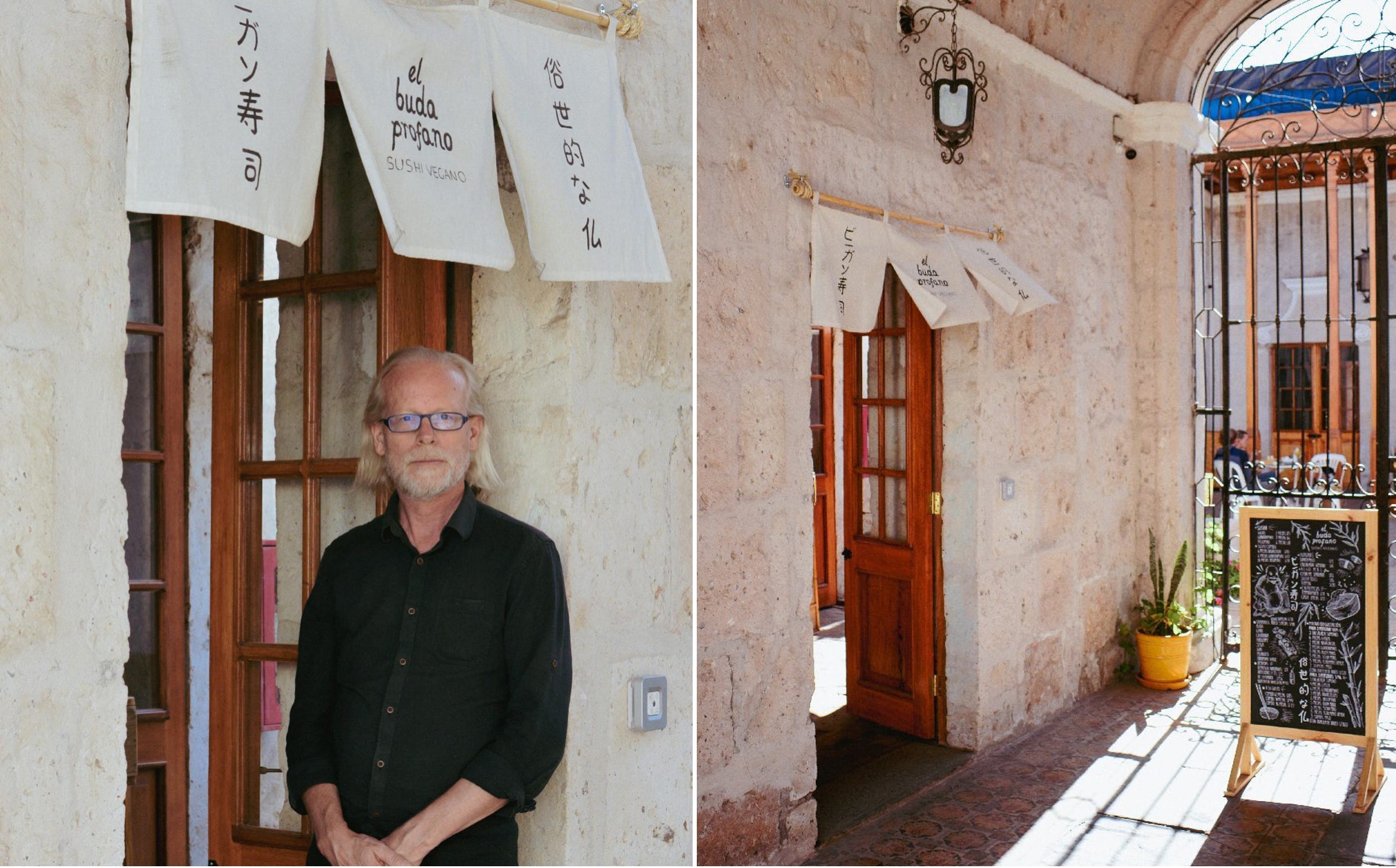
Recently, I had the chance to chat with Alan Pater, a native of Vancouver, Canada, who ran el buda profano from 2015 to 2022.
Nico: From your home base in British Columbia, Canada, you’ve travelled extensively throughout Latin America. So how did you end up in Arequipa and what inspired you to open an izakaya that served sushi vegano?
Alan: My travels in Latin America started in 2000 when I went to Guatemala to learn Spanish, and stayed for two years to run an internet cafe in Quetzaltenango. During those years I traveled a lot to neighbouring countries and everywhere I visited I discovered delicious local food.
On my return to Canada, I thought it would be cool if someone opened a restaurant featuring all those little known regional dishes. I did not have any restaurant experience, I was not Latino, but the idea stayed in my head.
A decade went by, I found myself on the island of Ometepe in Nicaragua. There, at a small vegetarian restaurant on a beach, I worked expanding the kitchen, adding a wine and beer menu, improving service, and formalizing opening hours.
The result was very positive, with rave reviews pouring in and a nightly full house. That gave me restaurant experience and less of an excuse to not open my own place.
Around that time someone asked what foods from Vancouver I missed. My answer: sushi, specifically vegan sushi. And from there the question became, “where should I open a cool little vegan sushi place?”
In 2014, I arrived in Arequipa, Peru. And what I found was a city known for its culinary scene, not only its native picanterías but a range of international restaurants as well. But the sushi options sucked, especially the vegan options. One can only eat so many cucumber rolls. And few got the rice right, some totally ruined the rice.
Nobody had a good vegan sushi place, so I decided to do it myself!
Nico: So you decided to do it yourself and opened el buda profano. But what’s the story behind the name?
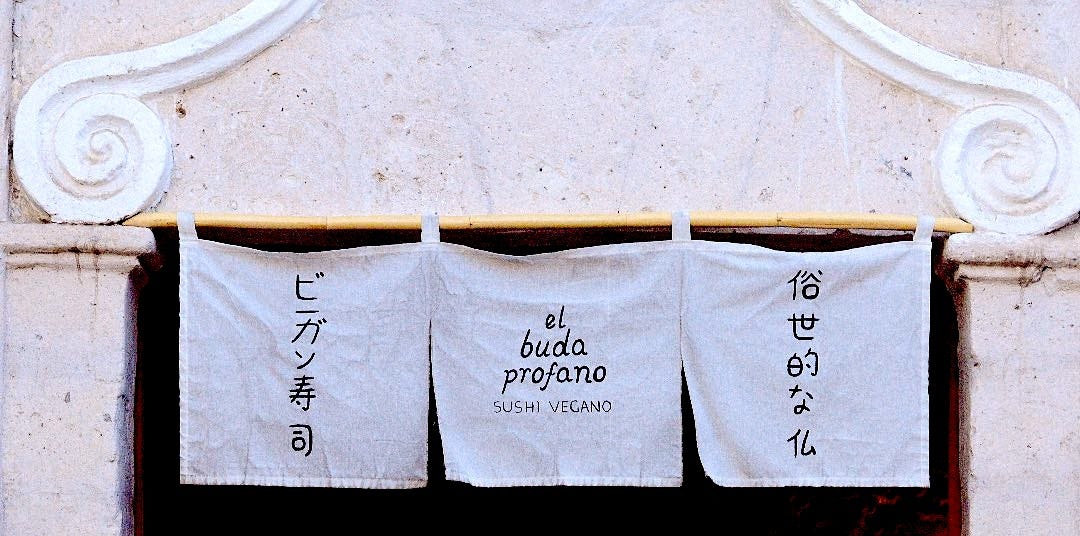
Alan: Yeah so there is a long tradition of buddhist food associated with veganism in Japan, in China, and in Korea. So while I respect that tradition, I am not a spiritual person and the restaurant would in no way be a temple. But I suspect serving sake, wine and beer would not be things one would find at a Buddhist temple. Knowing me, my girlfriend at the time suggested “el buda profano”, the profane buddha. That describes exactly how I think and feel about things.
We do not mean profane in a negative sense, but in a secular sense. It merges the buddhist concept of respect for all sentient life and the profane concept of using evidence and reason to determine one’s actions in a physical world. These concepts complement each other.
Nico: What was it like to dine at el buda profano in its previous incarnation? Tell us about the neighborhood and what made the place unique?
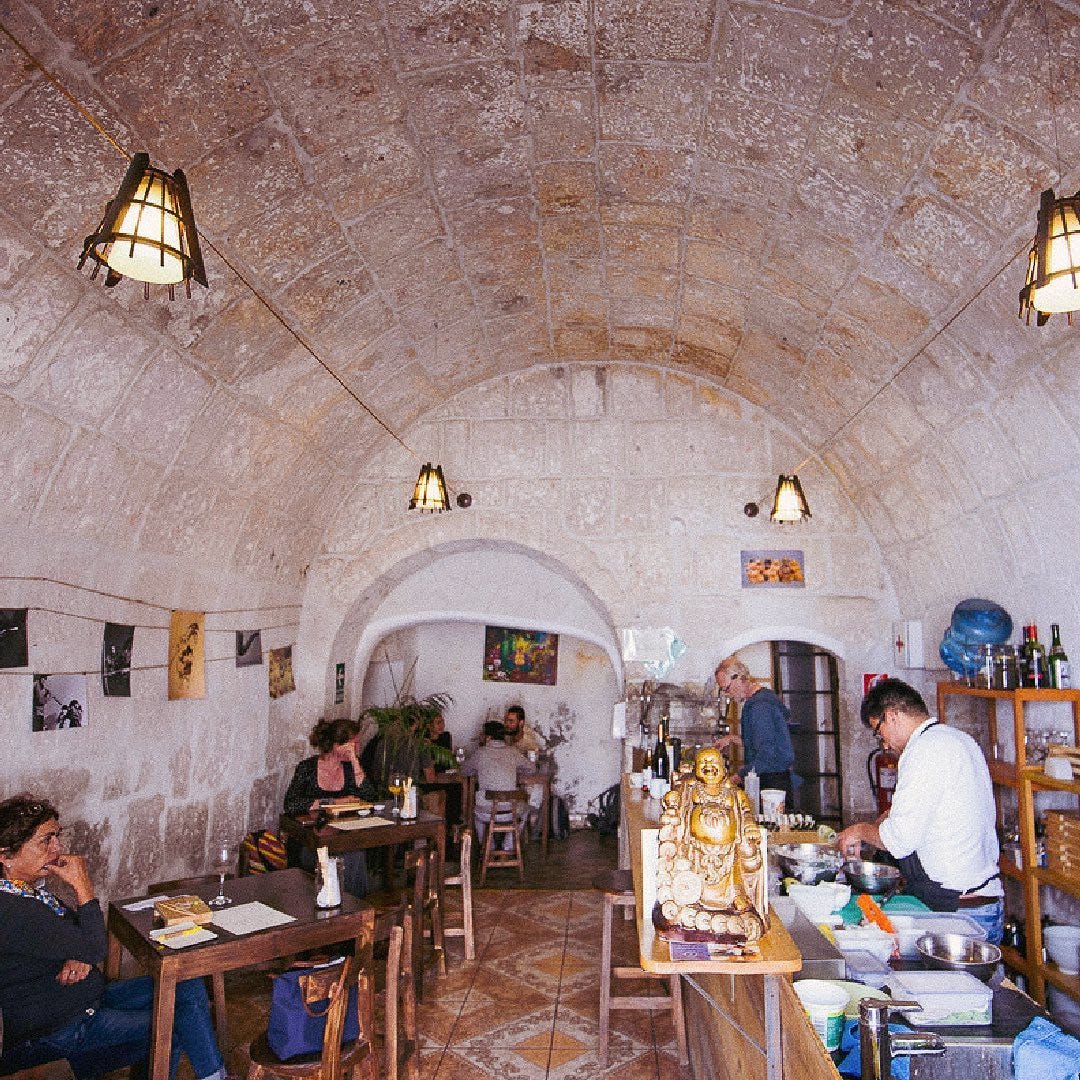
Alan: Our first location was behind the Monasterio de Santa Catalina in the historic center. We occupied one of several small spaces that had historically housed the servants of the nuns, daughters of wealthy families, cloistered in the convent.
These spaces featured high arched ceilings and were built of large blocks of sillar, the white volcanic stone that is said to have inspired the city’s nickname—la Ciudad Blanca, the White City.
The remodeled interior, constructed with the help of a local jack-of-all-trades, featured a full length wood bar fronting an open kitchen and five rustic wooden tables sourced from the local market.
Bebop played in the background and eclectic artwork hung on the walls.
To answer the question of what it was like to dine or even just hang out at el buda profano, I am going to lean on the words of others:
“Perfect your inner zen with a glass of wine (or sake) as you blend into the shabby-chic atmosphere.” — Fodors
“…the best vegan sushi of my life. No words. Light, savory, sour, sweet, a tinge of salt, sustainable–everything. el buda profano, with their shiitakes, tomato petals, cashews, and algae had me returning each day for lunch. In all honesty, they defined what food should be about, and I would literally food-travel thousands of miles again just for another bite.” — The Metropolitan
Nico: It’s one thing to have an idea for a restaurant, and another to assemble a crew of like-minded and like-spirited people to embark on a shared culinary journey with you. How did you put together your team, in the kitchen and front of house?
Alan: While it was rare to have staff who shared the values of ethical veganism, the unique concept did attract talented staff. I had the good luck to contract MasterChef Perú Jim Daniel Echevarría, who taught at a local culinary school, to help me equip the kitchen, develop the menu, and recruit and train the initial round of kitchen staff.
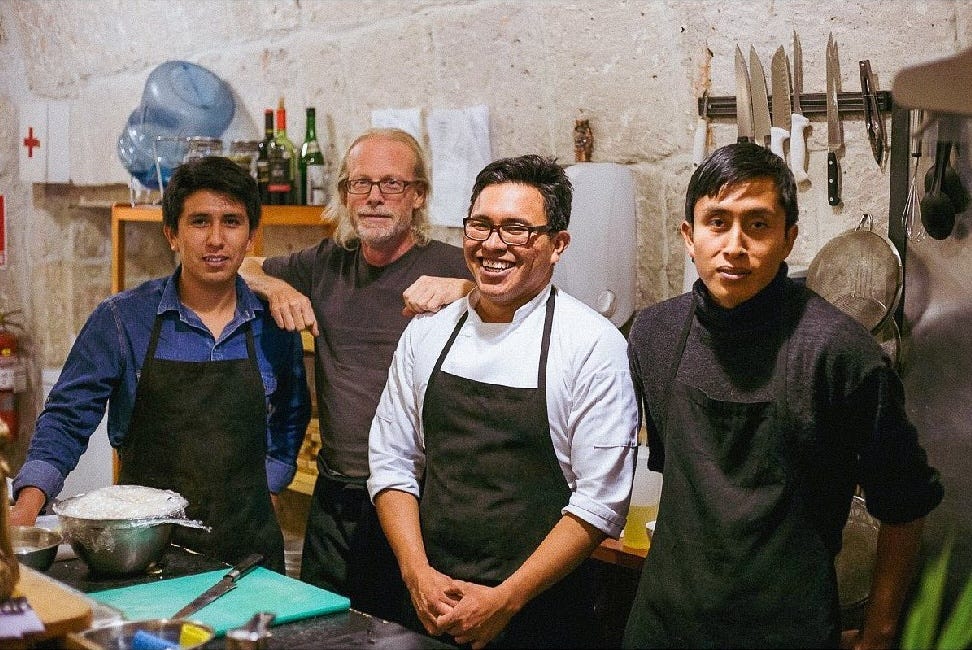
Jimbo was intrigued by the concept, and took it as a way to test his skills and creativity. He did a fantastic job, the dishes were amazing! Soon after opening, a French-trained chef knocked on our door to offer his services. We often had other international hands join us for a few months at a time.
And over the years, we hired a regular rotation of recent grads from local culinary schools. So with the back of house in professional hands, I was free to handle front of house duties, a role that I really enjoy. A few times we had other front of house staff, but for a lot of the time I was the one greeting and serving customers.
Nico: You and your team manifested el buda profano and opened its doors in December 2015. Did the menu change with seasonality? When I think of Peruvian ingredients I think of palta (avocado), potatoes, quinoa, squash, beans, corn, tomatoes, pineapple. How did you incorporate some of these uniquely Peruvian ingredients in your dishes? And what drinks paired well with the food you served?
Alan: The fresh produce available year-round in Peru helped a lot in maintaining a quality experience. As a result, we kept the same dishes on the menu throughout the seasons. Apart from the selection of sushi rolls, we also had a few dishes with a more local slant, such as our ceviche serrano oriental and a crema de zapallo.
The role that palta (avocado) plays in our dishes is the fat content and the creamy texture. So it is used when those characteristics will enhance the experience, one example is the maki (sushi roll) featuring beet, spinach, and avocado. These three flavours and textures complement and enhance each other.
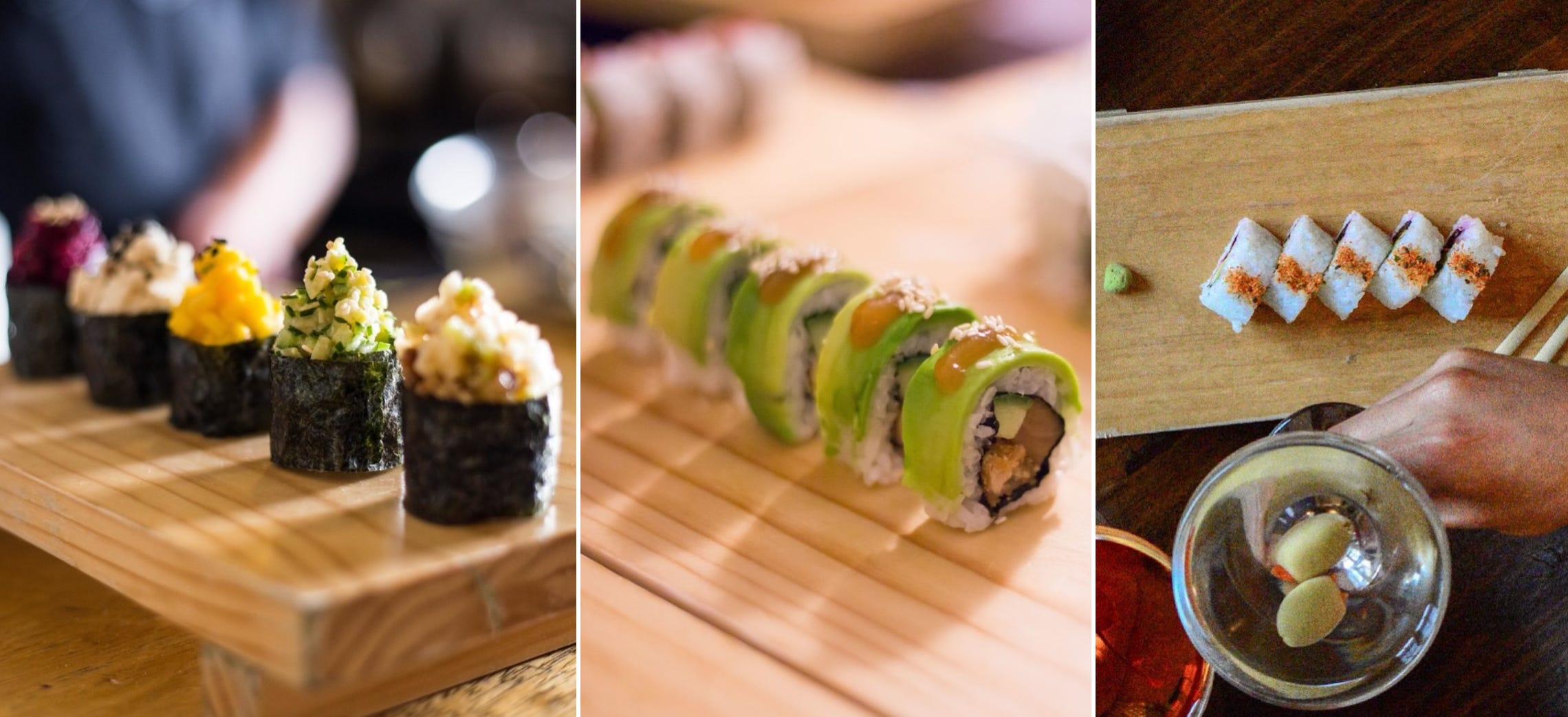
Gunkanmaki and uramaki sushi at el buda profano.Our drink menu did change more over the years. We had a selection of teas and fresh juices as well as a beer and wine menu curated by myself. After the pandemic we introduced a small cocktail menu selection as well, including an amazing pisco sour!
For the pisco sour foam, instead of egg whites, we made aquafaba from soy beans.
Sake paired best with sushi, but there was another beverage that paired really well with our food. The dry sparkling wines from Peru—made using the traditional French method—are fantastic and I made sure we always had some on hand.
Nico: Ceviche, of course, is an ancestral Peruvian dish of fish cured in citrus and hot peppers. Over time, Japanese cooks shaped the ceviche into the popular dish served all over Lima and along Peru’s Pacific Coast. How did your chef veganize ceviche and what about the ingredients and flavor make it serrano oriental (Andean-Asian)?
Alan: As is the same with all the other dishes on our menu, we did not try to emulate the flavour of fish. Instead of fish it features Andean ingredients like Peruvian fava beans and Asian ingredients like mushrooms and bean sprouts. The marinade as well is a mix of Peruvian and Asian seasonings: soy sauce, ginger, chilis, and limes.
Nico: I’ve heard you talk about your high standards and the importance of making good rice. Can you say more about that?
Alan: So the Japanese word “sushi” is a compound word: “su,” meaning sour and “shi,” meaning rice. But one cannot use just any rice for sushi. The key to good sushi is in the rice selection, in its preparation, and in its seasoning.
Sushi is made with a specific type of rice: white Japanese sticky rice. But we did not have to import it from Japan as it is now grown in Peru, as well as in California and in the Fraser Valley here in British Columbia, Canada.
So to make good sushi we start with the correct type of rice, we cook it in the correct fashion, and we season it with the correct vinegar mixture. Every good sushi chef has perfected their own specific way of doing this, and el buda profano is no exception.
Some vegan sushi places use brown or other whole grain rice due to their focus as health food restaurants, but the profane buddha is not a health food restaurant. Our goal is to offer delicious food and wine, an inviting atmosphere, and great service.
Nico: So for seven years, el buda profano was a popular, casual, rustic, neighborhood izakaya that served vegan sushi and drinks. Why did it all end?
Alan: The pandemic was very hard for everyone in Peru on so many levels, but the restaurant managed to survive and was just starting to regain its full potential. But the political crisis at the end of 2022 was the final nail in the coffin.
With the city shut down for a month it was like going back to pandemic times all over again, but now with a lot of pandemic-era debt. Staff couldn’t safely make it to work due to blockades. Customers, both local and international, were staying home.
The landlord insisted we pay rent in full at the first of the month. It looked like it would be months before things returned to some level of normality. Again. The difficult decision to close it down became the only viable option.
Nico: It’s been almost three years since el buda profano closed its doors, but you’ve said that it’s your life goal to bring it back. Now that you’ve returned to your native Canada, what is the vision that you have for the next iteration of the profane buddha?
Alan: My vision for the rebirth of the profane buddha is a cool space in Canada where people enjoy great food and drinks and music and art. I dream of attracting a team of like-minded individuals who share the goals of helping wean society off of eating animals via delicious food.
I envision being part of an ecosystem changing the dining world’s choice architecture away from exploiting animals. And I look forward to again sharing an amazing experience with friends.
The restaurant continues to receive 5-star reviews online even after being closed since 2022. And I regularly receive emails asking when the place will reopen.
I would like to invite any readers to get in touch. Do you have kitchen skills? Finance skills? I am looking for potential partners to help make the relaunch reality.
Photos courtesy of @elbudaprofano. Follow the next incarnation @theprofanebuddha.
What a great quote - “We do not mean profane in a negative sense, but in a secular sense. It merges the buddhist concept of respect for all sentient life and the profane concept of using evidence and reason to determine one’s actions in a physical world. These concepts complement each other.”
Thank you Nico for sharing the story of the profane buddha!
I would like to invite everyone to re-watch the linked video, it really showcases the food and the atmosphere, and hints at what we can create here in Vancouver.