

I love making empanadas. From cooking the filling, to working the dough with my hands, to shaping the empanadas the process is a culinary meditation that connects me to family and our creole roots.
A Family Tradition
Mom told me that my abuelita used to make empanadas and sell them in the street outside her brother’s school in Lima’s working class neighborhood of Barrios Altos. That was in the 1940s, and the beginning of my family’s empanada making tradition that I am proud to continue today.
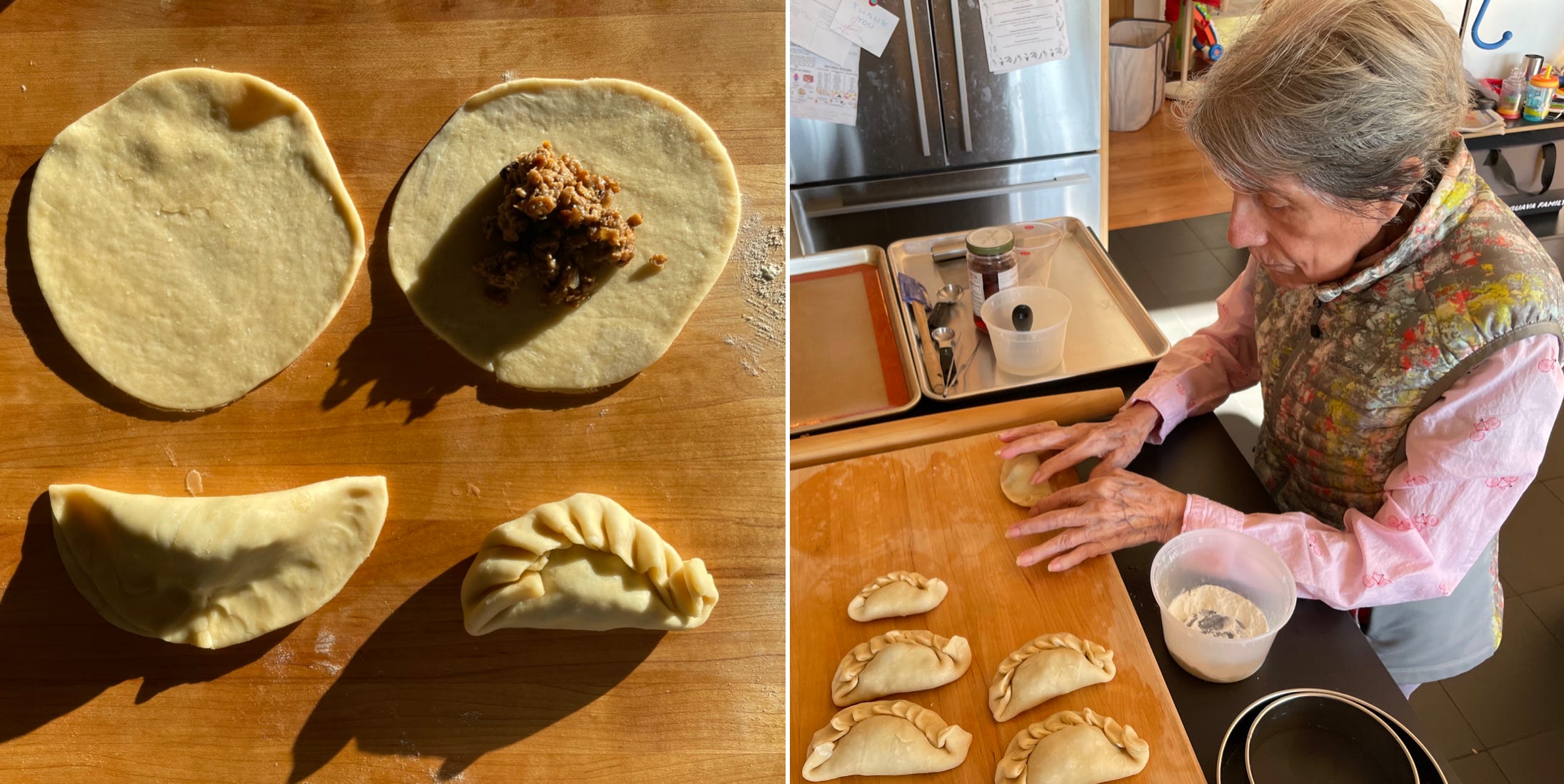
In 2022, less than one year before she passed away, my mom and I made empanadas for the family. That was the last time we cooked together. And I remember her beautiful hands—that have cooked Peru’s creole food for more than 80 years—carefully folding the empanada dough.
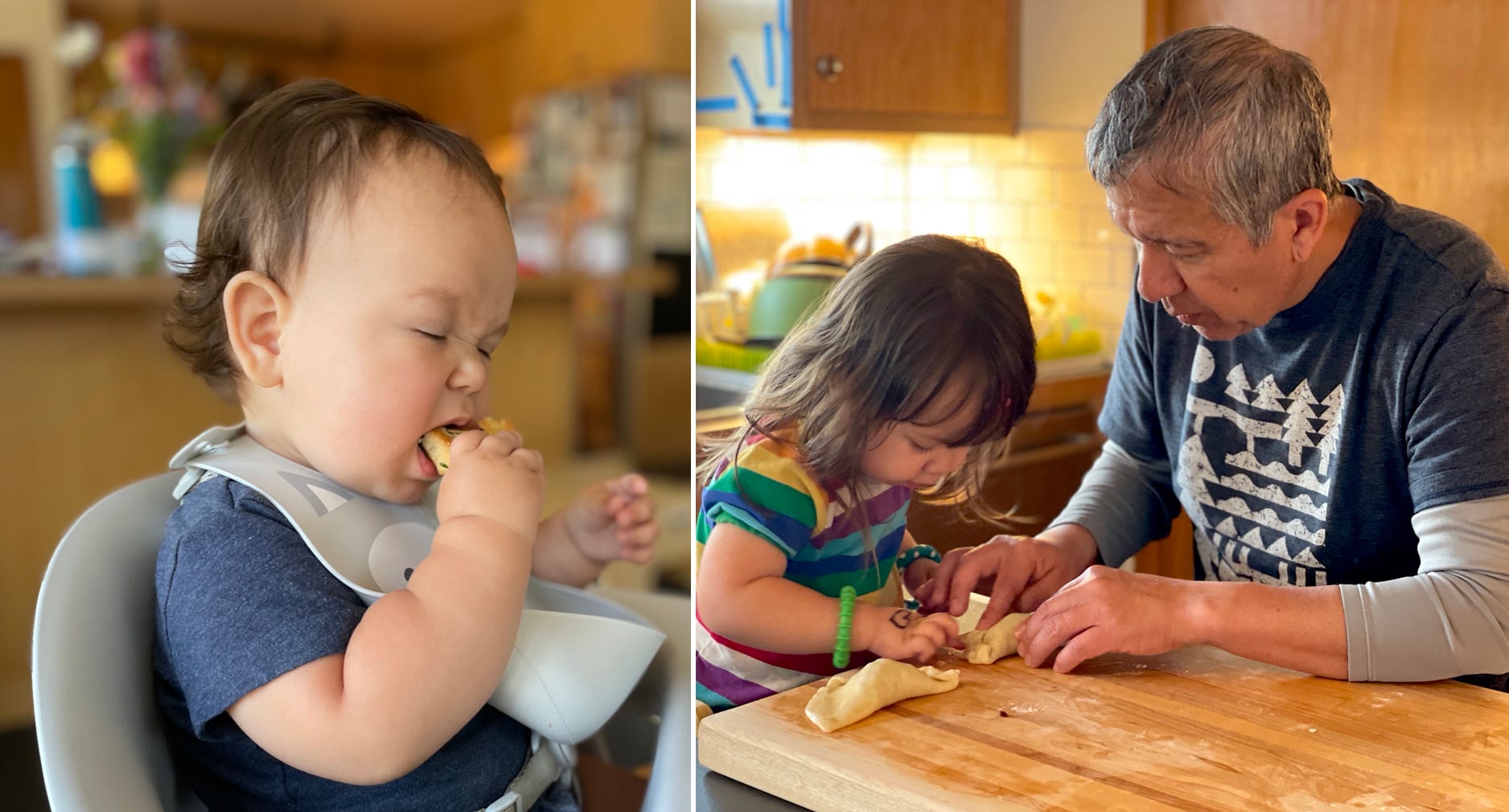
After seeing the expression of bliss on my son’s face—from tasting his first bite of empanada at an early age—I started teaching my daughter how to make empanadas. I love their curiosity and interest in helping me cook, and I think we have all inherited my mom’s cooking hands.
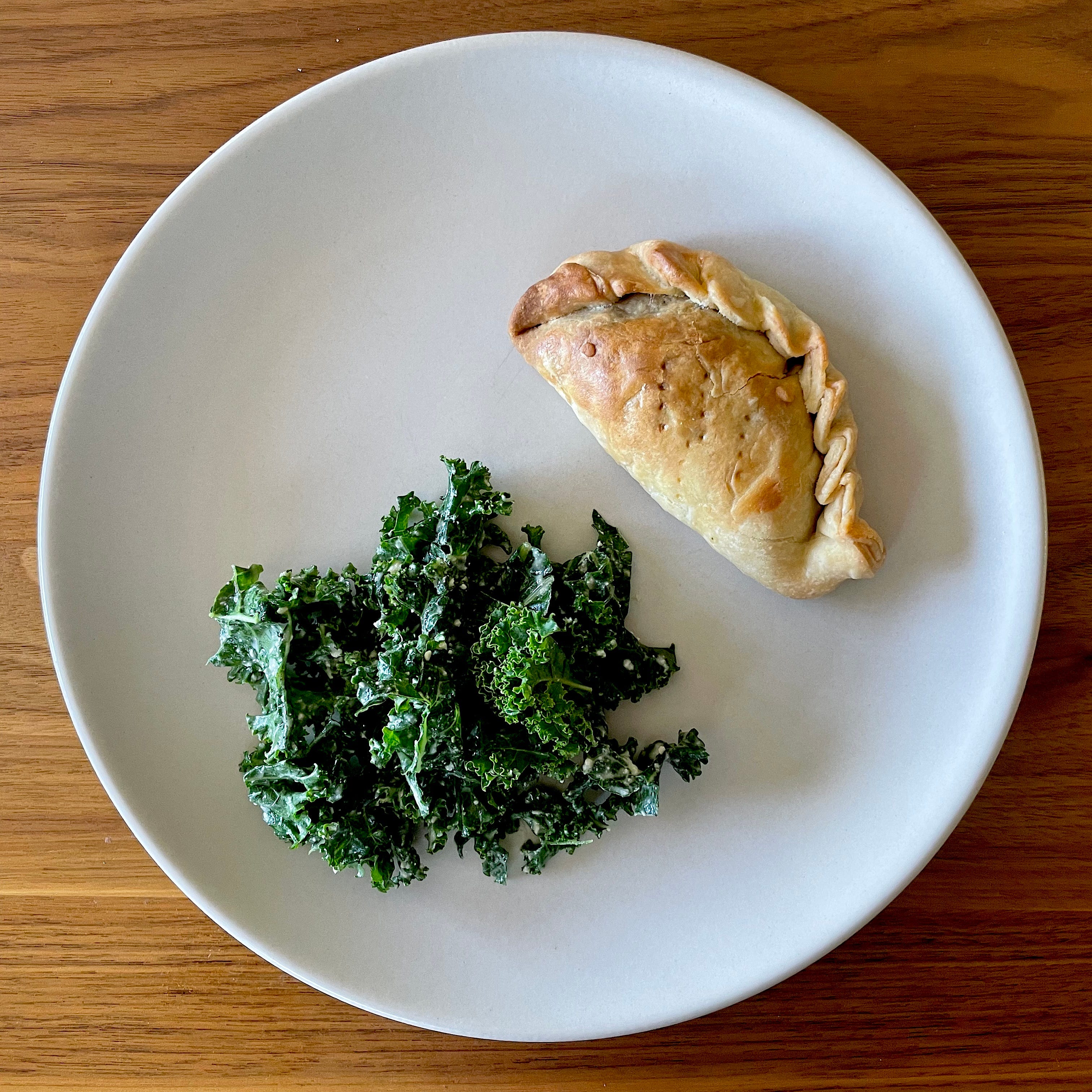
I like to bake empanadas for lunch or dinner, served with a side of greens and glass of red wine. If we don’t finish them in one sitting, I store them in a sealed container and refrigerate them for a couple of days. I really enjoy a reheated breakfast empanada with my cafe con leche.
Empanadas Sin Carne
Baked plant-based beef empanadas.
Serves 12
Empanadas are a portable South American classic of fried or baked hand pies with a savory or sweet filling. Thought to originate in northern Spain, colonial foodways brought the empanada to Peru, where creole cooks made it their own. Street-food vendors have been hawking empanadas in Lima for more than 150 years. And according to colonial-era chronicler Ricardo Palma, empanadas arrived at Noon, after the morning tamales and before the afternoon alfajores.
Making the dough from scratch is a rewarding effort because each time you knead, roll, and shape the dough you build a memory of the scent and texture of dough that is just right. The baked pastry acts as a vehicle for different fillings. Here, the classic filling of ground beef is replaced with an analog plant-protein. An onion sauté base with garlic, spices, broth, and bay leaf enhances the savory filling; while currants and olives add fruitiness.
FILLING
2 tablespoons vegetable oil
2 crushed garlic cloves
1 cup diced red onion
1 pound plant-based ground beef (such as Beyond Meat, thawed if frozen)
1/4 teaspoon salt
1/4 teaspoon pepper
1/4 teaspoon cumin
1/4 teaspoon oregano
1/2 cup plant-based beef stock, or water
1/4 cup currants or raisins
1 bay leaf
12 pitted Kalamata olives
DOUGH
3 cups flour, plus more to dust the work surface
1 cup solid vegetable shortening (such as Spectrum Organics)
1/4 teaspoon salt
1 teaspoon white wine vinegar
1 cup cold water
GLAZE
1/4 cup oat milk
Preheat the oven to 375°F.
For the filling, in a large non-stick skillet over medium to high heat, warm the vegetable oil. Add the onion and garlic, stir and sauté until the onion becomes translucent. Mix in the plant-based ground beef, and use the edge of a spatula to break up large pieces. Season with salt, pepper, cumin, and oregano. Stir occasionally until the filling begins to brown. Add the stock, then mix in the currants and bay leaf. Simmer until the liquid reduces almost completely. Transfer the filling to a bowl, and compost the bay leaf. If making the dough later or the next day, refrigerate the filling in a sealed container.
For the dough, in a large bowl, combine the flour and shortening. Use a spatula to mix thoroughly, add the salt and vinegar, and continue to mix until the dough has a uniform consistency. Add about 3/4 cups water, 2 tablespoons at a time, while continuing to mix. Shape the dough in the bowl by hand to form a dome. If the dough doesn’t keep its shape, add a few more tablespoons of water. The dough should have some elasticity when pulled and not easily crumble or tear apart. Transfer the dough to a floured working surface, and knead the dough for 1 to 2 minutes. Roll the dough into a log and cut into 12 equal pieces. Roll out each piece of dough and cut into 6-inch diameter circles.
To assemble, place the dough circles on a flat, floured working surface. Scoop 2 tablespoons of filling onto the center of each circle and place an olive on top. Use a brush or your fingers to moisten the edges of the dough circles with water. Fold the dough circles in half. With your fingertips, press down firmly on the curved edges to seal the empanadas.
The repulgue along the curved, sealed edge gives the empanada its distinctive style.
To make the repulgue braid:
Place an empanada in front of you with the curved edge facing away from you and the straight edge facing towards you.
Using your left thumb and left index finger, pinch the left corner, where the curved edge meets the straight edge, and fold the pinched dough towards the center of the empanada.
Place your left index finger over the dough you just folded. Then, using your right thumb and right index finger, pinch a piece of dough on the curved edge to the right of your left index finger and pull and fold the pinched dough over your left index finger.
Remove your left index finger from under the folded dough. Then, place your left index finger to the right of the dough you just folded.
Repeat this pinching, pulling, and folding until you reach the rightmost corner of the empanada. Then, fold the right corner towards the center.
To bake, arrange the empanadas flat on a baking sheet lined with a silicone mat or parchment paper. Brush the top of the empanadas with oat milk, then perforate the top of each empanada with a fork three times, making three parallel dotted lines. Put the baking sheet in the oven and bake the empanadas until they turn golden brown and have a firm, puffy shape, about 40 minutes. Serve warm.
Nico, These empanadas look amazing! And I love the stories and photos with your family. So very special. Thanks for sharing this wonderful recipe. ❤️
Fabulous...the world needs excellent plant-based empanadas - as much as possible!